
Choosing the right television mount can completely change how your living space looks and functions. From saving floor space to improving viewing angles and creating a cleaner setup, understanding tv mount types helps homeowners make smarter decisions. With so many options available, it is easy to feel overwhelmed or choose a mount that does not fit your room layout or viewing habits.
This guide breaks down the most common tv mount types, explains where each works best, and helps you decide what makes sense for your home. Whether you live in a compact apartment or a family home or want a sleek entertainment wall, this detailed explanation will help you choose confidently.
Why Choosing the Right TV Mount Matters
A television is often the visual centerpiece of a room. Mounting it incorrectly can lead to uncomfortable viewing angles, glare, limited movement, or even safety risks. Selecting the correct mount ensures your TV is secure, positioned at the right height, and easy to enjoy for years.
Understanding the types of TV mounts also helps prevent unnecessary wall damage and avoids replacing mounts later. Each type serves a specific purpose depending on room size, seating arrangement, and how often you need to adjust the screen.
Understanding TV Mount Basics
Before comparing different TV mount types, it is important to understand a few basic considerations:
- TV size and weight compatibility
- Wall type, including drywall, concrete, or brick
- Viewing height and seating distance
- Cable management needs
- Room lighting and glare sources
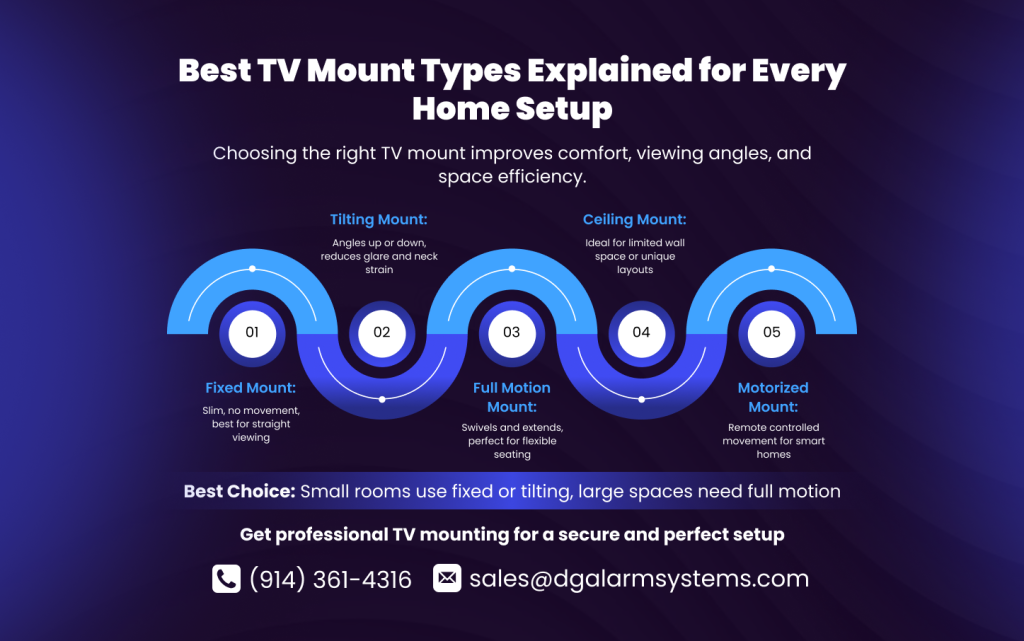
Fixed TV Mounts
Fixed mounts are the simplest and most affordable option among all tv mount types. They hold the television flat against the wall with no movement or adjustment.
This option works best when your TV will always be viewed from the same position and height. Fixed mounts create a clean, low-profile look that resembles a built-in installation.
Best use cases
- Living rooms with straight-on seating
- Bedrooms where viewing angles do not change
- Minimalist or modern designs
While fixed mounts are secure and budget-friendly, they offer no flexibility if glare or seating arrangements change.
Tilting TV Mounts
Tilting mounts allow the screen to angle vertically up or down. This is one of the most practical tv mount types for rooms where the television is installed slightly above eye level.
By tilting the TV downward, viewers reduce neck strain and glare from overhead lighting or windows.
Best use cases
- Fireplaces with TVs mounted above the mantel
- Bedrooms with elevated wall placement
- Rooms with ceiling lights are causing screen reflection
Tilting mounts offer a balance between simplicity and adjustability without significantly increasing cost.
Full Motion TV Mounts
Full motion mounts, also known as articulating mounts, offer the most flexibility among tv mount types. These mounts allow the television to extend outward, swivel left or right, and tilt up or down.
They are ideal for rooms with multiple seating areas or open floor plans where viewing angles change frequently.
Best use cases
- Large living rooms with sectional seating
- Open-concept homes
- Corner wall installations
Many homeowners combine TV mounting with residential security systems to maintain a safe and organized environment without exposed wires or unstable installations.
Ceiling TV Mounts
Ceiling mounts are less common but still important when discussing mount types. These mounts suspend the television from the ceiling rather than attaching it to a wall.
They are often used in commercial spaces or unconventional residential layouts where wall mounting is not possible.
Best use cases
- Home gyms
- Kitchens
- Lofts with limited wall space
Ceiling mounts require careful installation and precise measurements to ensure safety and stability.
Motorized TV Mounts
Motorized mounts represent the premium end of tv mount. These mounts use remote controls or smart integration to move the television automatically.
They can raise, lower, tilt, or rotate the screen with minimal effort.
Best use cases
- Luxury home theaters
- Smart homes with automation systems
- Accessibility-focused setups
While expensive, motorized mounts provide convenience and a high-end experience when integrated properly.
Comparing TV Mount Types at a Glance
| TV Mount Type | Movement Options | Best For | Cost Range |
| Fixed Mount | None | Straight viewing | Low |
| Tilting Mount | Vertical tilt | Higher wall placement | Low to Medium |
| Full Motion Mount | Swivel and tilt | Flexible seating | Medium |
| Ceiling Mount | Vertical rotation | Limited wall space | Medium |
| Motorized Mount | Automated movement | Smart homes | High |
Installation Considerations
Even the best mount will not perform well if installed incorrectly. Many homeowners attempt to install a tv wall mount without proper tools or experience, leading to uneven placement or safety risks. While DIY installation is possible, professional help ensures correct stud placement, weight distribution, and cable management.
If you are installing wall mount tv systems in high-traffic areas or above fireplaces, professional support reduces long-term issues and protects your investment.
Safety and Cable Management
A secure mount prevents accidents, especially in homes with children or pets. Proper mounting also hides cables for a cleaner look. When integrated with home automation systems, mounted TVs can blend seamlessly into a connected living space.
Choosing the Right Mount for Your Home Setup
Selecting among different tv wall mount types depends on how you use your space:
- Small rooms benefit from fixed or tilting mounts
- Multi-use rooms work best with full-motion mounts
- Modern smart homes pair well with motorized mounts
- Unique layouts may require ceiling solutions
Understanding the types of tv wall mounts helps avoid overpaying for features you do not need or underestimating flexibility requirements.
When Professional Help Makes Sense
If your installation involves brick walls, large TVs, or complex layouts, professional services are often worth the investment. Experts who specialize in professional TV wall mounting ensure alignment, structural safety, and clean finishes.
Some homeowners also bundle mounting with commercial security solutions or upgrades from providers like D&G Alarm Systems, creating a unified and efficient home setup.
Final Thoughts
Understanding tv mount types allows you to create a viewing experience that matches your lifestyle and room layout. From simple fixed mounts to advanced motorized systems, the right choice improves comfort, aesthetics, and safety.
Take time to evaluate your space, viewing habits, and future needs before deciding. With the right planning, your mounted TV becomes a seamless part of your home rather than a limitation. Let experts handle your TV mounting for a clean, secure, and professional setup custom to your home.
Call: (914) 361-4316
Email: sales@dgalarmsystems.com
Frequently Asked Questions
Which TV mount type is best for a living room
Full motion mounts are ideal because they allow swiveling and tilting for different seating positions.
Are fixed TV mounts safe for large TVs
Yes, as long as the mount matches the TV size and weight and is installed correctly into wall studs.
Can I change TV mount types later
Yes, but switching mount types may require new wall holes or adjustments to the mounting height.
Do tilting mounts help reduce screen glare
Yes, tilting mounts are effective at minimizing glare from windows or overhead lighting.
Should I hire a professional to mount my TV
Professional installation ensures proper alignment, safety, and clean cable management, especially for larger TVs.